
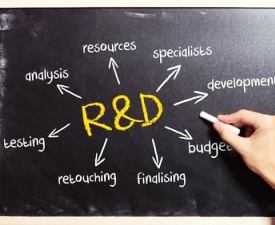
Description
Course Name: Diploma In Research & Development
Course Id: DRD/Q0001.
Eligibility: Completion of 10+2 (higher Secondary) or equivalent.
Objective: A Diploma in Research & Development provides a solid foundation for individuals seeking to work in the field of innovation, product development, and scientific research. The program equips students with the technical, analytical, and managerial skills needed to contribute to the R&D processes in various industries.
Duration: Six Months.
How to Enroll and Get Certified in Your Chosen Course:
Step 1: Choose the course you wish to get certified in.
Step 2: Click on the “Enroll Now” button.
Step 3: Proceed with the enrollment process.
Step 4: Enter your billing details and continue to course fee payment.
Step 5: You will be redirected to the payment gateway. Pay the course and exam fee using one of the following methods:
Debit/Credit Card, Wallet, Paytm, Net Banking, UPI, or Google Pay.
Step 6: After successful payment, you will receive your study material login ID and password via email within 48 hours of fee payment.
Step 7: Once you complete the course, take the online examination.
Step 8: Upon passing the examination, you will receive:
• A soft copy (scanned) of your certificate via email within 7 days of examination.
• A hard copy (original with official seal and signature) sent to your address within 45 day of declaration of result.
Step 9: After certification, you will be offered job opportunities aligned with your area of interest.
Online Examination Detail:
Duration- 120 minutes.
No. of Questions- 60. (Multiple Choice Questions).
10 Questions from each module, each carry 10 marks.
Maximum Marks- 600, Passing Marks- 40%.
There is no negative marking in this module.
| How Students will be Graded: | ||
| S.No. | Marks | Grade |
| 1 | 91-100 | O (Outstanding) |
| 2 | 81-90 | A+ (Excellent) |
| 3 | 71-80 | A (Very Good) |
| 4 | 61-70 | B (Good) |
| 5 | 51-60 | C (Average) |
| 6 | 41-50 | P (Pass) |
| 7 | 0-40 | F (Fail) |
Key Benefits of Certification- Earning a professional certification not only validates your skills but also enhances your employability. Here are the major benefits you gain:
Practical, Job-Ready Skills – Our certifications are designed to equip you with real-world, hands-on skills that match current industry demands — helping you become employment-ready from day one.
Lifetime Validity – Your certification is valid for a lifetime — no renewals or expirations. It serves as a permanent proof of your skills and training.
Lifetime Certificate Verification – Employers and institutions can verify your certification anytime through a secure and reliable verification system — adding credibility to your qualifications.
Industry-Aligned Certification –All certifications are developed in consultation with industry experts to ensure that what you learn is current, relevant, and aligned with market needs.
Preferred by Employers – Candidates from ISO-certified institutes are often prioritized by recruiters due to their exposure to standardized, high-quality training.
Free Job Assistance Based on Your Career Interests – Receive personalized job assistance and career guidance in your preferred domain, helping you land the right role faster.
Syllabus
Fundamentals of Research & Development: Introduction to Research and Development, Importance of R&D in Various Industries, Types of Research – Basic, Applied, and Experimental, Research Methodologies and Approaches, Role of Innovation in R&D, Ethical Considerations in Research, Data Collection Techniques, Literature Review and Research Gap Identification, Intellectual Property Rights in R&D, Trends and Future of R&D.
Research Methodology and Design: Understanding Research Design and Planning, Qualitative vs. Quantitative Research, Experimental Design and Hypothesis Testing, Sampling Techniques and Data Collection, Statistical Tools for Research, Reliability and Validity in Research, Research Documentation and Reporting, Use of Technology in Research, Case Study Method in Research, Best Practices in Research Execution.
Data Analysis and Interpretation: Introduction to Data Analysis, Statistical Tools and Software (SPSS, MATLAB, R), Descriptive and Inferential Statistics, Regression and Correlation Analysis, Hypothesis Testing and Significance Levels, Data Visualization Techniques, Big Data and its Role in Research, Interpretation of Research Findings, Machine Learning in Data Analysis, Error Analysis and Troubleshooting.
Product Development & Prototyping: Introduction to Product Development Process, Concept Generation and Feasibility Study, Market Research for Product Development, Prototyping Techniques and Rapid Prototyping, Design Thinking in Product Innovation, Testing and Quality Control, Manufacturing and Scalability Considerations, Cost Estimation and Resource Planning, Intellectual Property Considerations in Product Development, Case Studies of Successful Product Development.
Research Documentation & Scientific Writing: Principles of Technical and Scientific Writing, Writing Research Proposals and Grants, Research Paper Formatting and Structuring, Citation Styles and Referencing (APA, MLA, Chicago), Effective Presentation of Research Findings, Writing Research Reports and Theses, Plagiarism and Ethical Considerations, Peer Review Process in Research, Scientific Publishing and Journals, Presenting Research at Conferences.
Innovation Management & Technology Transfer: Understanding Innovation Management, Role of R&D in Business Growth, Technology Transfer and Commercialization, Open Innovation vs. Closed Innovation, Managing R&D Projects, Risk Assessment in R&D, Industry-Academia Collaboration, Government Policies and Funding for R&D, Innovation Ecosystem and Startups, Case Studies of Technological Innovations.
Job Opportunities after Diploma in Research & Development
Graduates of this program gain knowledge in research methodologies, data analysis, innovation processes, product development, documentation, and analytical thinking, preparing them for roles in research, product development, and innovation-driven sectors.
Key Career Options: Research Assistant, R&D Executive, Product Development Assistant, Lab Assistant, Innovation Executive, Data Analyst (Research), Technical Assistant, Quality Analyst, Research Associate, Documentation Specialist.
Salary Range (India):
Entry-level: ₹2.5–4 LPA
Mid-level: ₹4–8 LPA
Senior-level: ₹8–15+ LPA
Industries Hiring Graduates: Research & Development Organizations, Pharmaceutical Companies, Manufacturing Industries, IT & Technology Firms, FMCG Companies, Biotechnology Firms, Educational & Research Institutions, Consulting Firms, Government Research Bodies.
Skills Developed: Research methodologies, data collection & analysis, report writing, problem-solving, innovation techniques, technical documentation, critical thinking, and use of research tools.
Graduates can progress to roles like Senior Research Analyst, Product Development Manager, Innovation Lead, or pursue higher education such as M.Sc., MBA, or specialized research certifications to advance into senior research and leadership positions.

