
Description
Course Name: Diploma in HVAC Technician
Course Id: DHVAC/Q1001.
Eligibility: Completion of 10th (high School) or equivalent.
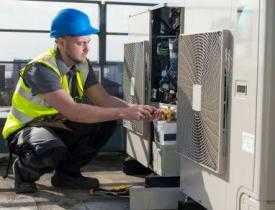
Objective: This course aims to provide learners with comprehensive knowledge of heating, ventilation, and air conditioning (HVAC) systems. It focuses on developing skills to install, maintain, and troubleshoot HVAC equipment to ensure optimal indoor air quality and energy efficiency.
Duration: Six Months.
How to Enroll and Get Certified in Your Chosen Course:
Step 1: Choose the course you wish to get certified in.
Step 2: Click on the “Enroll Now” button.
Step 3: Proceed with the enrollment process.
Step 4: Enter your billing details and continue to course fee payment.
Step 5: You will be redirected to the payment gateway. Pay the course and exam fee using one of the following methods:
Debit/Credit Card, Wallet, Paytm, Net Banking, UPI, or Google Pay.
Step 6: After successful payment, you will receive your study material login ID and password via email within 48 hours of fee payment.
Step 7: Once you complete the course, take the online examination.
Step 8: Upon passing the examination, you will receive:
• A soft copy (scanned) of your certificate via email within 7 days of examination.
• A hard copy (original with official seal and signature) sent to your address within 45 day of declaration of result.
Step 9: After certification, you will be offered job opportunities aligned with your area of interest.
Online Examination Detail:
Duration- 120 minutes.
No. of Questions- 60. (Multiple Choice Questions).
10 Questions from each module, each carry 10 marks.
Maximum Marks- 600, Passing Marks- 40%.
There is no negative marking in this module.
| How Students will be Graded: | ||
| S.No. | Marks | Grade |
| 1 | 91-100 | O (Outstanding) |
| 2 | 81-90 | A+ (Excellent) |
| 3 | 71-80 | A (Very Good) |
| 4 | 61-70 | B (Good) |
| 5 | 51-60 | C (Average) |
| 6 | 41-50 | P (Pass) |
| 7 | 0-40 | F (Fail) |
Key Benefits of Certification- Earning a professional certification not only validates your skills but also enhances your employability. Here are the major benefits you gain:
Practical, Job-Ready Skills – Our certifications are designed to equip you with real-world, hands-on skills that match current industry demands — helping you become employment-ready from day one.
Lifetime Validity – Your certification is valid for a lifetime — no renewals or expirations. It serves as a permanent proof of your skills and training.
Lifetime Certificate Verification – Employers and institutions can verify your certification anytime through a secure and reliable verification system — adding credibility to your qualifications.
Industry-Aligned Certification –All certifications are developed in consultation with industry experts to ensure that what you learn is current, relevant, and aligned with market needs.
Preferred by Employers – Candidates from ISO-certified institutes are often prioritized by recruiters due to their exposure to standardized, high-quality training.
Free Job Assistance Based on Your Career Interests – Receive personalized job assistance and career guidance in your preferred domain, helping you land the right role faster.
Syllabus
Fundamentals of HVAC Systems: Introduction to HVAC, Basic Thermodynamics, Heat Transfer Principles, Properties of Air and Psychometrics, Refrigeration Cycle and Components, Refrigeration Systems & Components: Types of Refrigeration Systems, Compressors, Condensers, Evaporators, and Expansion Devices, Refrigerants and Environmental Considerations, Refrigeration Load Calculation.
Air Conditioning & Heating Systems: Types of Air Conditioning Systems (Window, Split, Central, VRF, etc.), Cooling Load Estimation, Ducting and Air Distribution Systems, Filters, Humidifiers, and Dehumidifiers, Heating Systems: Types of Heating Systems (Boilers, Heat Pumps, Radiant Heating), Heat Load Calculations, Heat Exchangers and Their Applications, Fuel Types and Efficiency Considerations.
Ventilation & Air Quality: Principles of Ventilation, Types of Ventilation Systems (Natural, Mechanical, Hybrid), Indoor Air Quality (IAQ) and Standards, Air Filtration and Purification, Airflow Fundamentals, Ventilation Systems in HVAC, Filtration & Air Cleaning, Ventilation Design Considerations, Monitoring & Maintaining Air Quality, Regulations, Standards and Sustainability.
HVAC Equipment Installation & Maintenance: Tools and Safety Procedures, Installation of HVAC Equipment, Preventive Maintenance and Troubleshooting, System Diagnostics and Repairs, Electrical & Control Systems in HVAC: Basic Electrical Concepts for HVAC, Motors, Sensors, and Control Circuits, Thermostats, Relays, and Contactors, Building Automation Systems (BAS) and Smart Controls.
HVAC System Design & Load Calculation: Manual J, Manual D, and Manual S Calculations, Energy Efficiency in HVAC Design, Building Insulation and Thermal Comfort, Software for HVAC Load Calculation (e.g., HAP, TRACE 700), Energy Efficiency & Green HVAC Systems: Energy-Efficient HVAC Design, Renewable Energy Integration (Solar, Geothermal), LEED and Green Building Standards, HVAC Retrofits and Upgrades.
HVAC Codes, Standards, and Regulations: ASHRAE Standards, National Building Codes for HVAC, Environmental Regulations on Refrigerants, Occupational Safety and Health Regulations, Variable Refrigerant Flow (VRF) Systems, Chillers and Cooling Towers. HVAC for Industrial and Commercial Applications, Cold Storage and Specialized Cooling Systems.
Job Opportunities after completion of Diploma in HVAC Technician Course
After completing the Diploma in HVAC (Heating, Ventilation, and Air Conditioning) Technician program, graduates can pursue careers in installation, maintenance, repair, design, and management of HVAC systems across residential, commercial, and industrial sectors. The program builds strong technical skills required to handle modern cooling, heating, and ventilation systems efficiently.
Top Roles: HVAC Technician, HVAC Engineer, HVAC Service Manager, HVAC Design Engineer, Building Systems Technician, Refrigeration Technician, Energy Efficiency Consultant, HVAC Project Manager, Field Supervisor, Sales Engineer (HVAC), Preventive Maintenance Technician, BIM HVAC Technician, HVAC Trainer/Instructor, Maintenance Supervisor.
Key Skills: HVAC system installation and maintenance, refrigeration cycles, electrical troubleshooting, system diagnostics, load calculation, energy efficiency optimization, blueprint reading, preventive maintenance, safety compliance, technical drawing (BIM basics), problem-solving, customer service, teamwork.
Industries: Residential and commercial building services, construction and real estate development, industrial manufacturing plants, facility management companies, refrigeration and cold storage industries, energy and environmental consulting firms, mechanical contracting companies, government infrastructure projects, hospitals, hotels, and educational institutions.
Salary Range (India):
Entry-level: ₹2.5–₹4.5 LPA
Mid-level: ₹4.5–₹8 LPA
Senior-level: ₹8–₹12+ LPA
Scope: Strong and stable demand due to increasing construction activities, rising need for energy-efficient buildings, growth of smart HVAC systems, and expansion of commercial infrastructure in India and globally. Skilled HVAC professionals are essential for maintaining comfort, safety, and energy efficiency in modern buildings.


