
50% Off

Certificate in Pencil Drawing

Rs.6,000 Rs.3,000

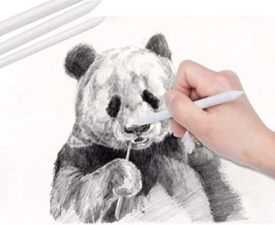
The course equips learners with skills to create expressive and detailed pencil drawings using proper techniques, shading, and composition.

Description

Course Name: Certificate in Pencil Drawing

Course Id: CPD/Q1001.
Eligibility: 10th Grade (high school) or Equivalent.

Duration: Two Month.

Objective: The Certificate in Pencil Drawing course is designed to introduce learners to the fundamental techniques and skills of drawing using pencils. The course aims to develop strong observational skills, control, and creativity while mastering shading, textures, and realistic representations through pencil art.

🎓 How to Enroll and Get Certified in Your Chosen Course:

✔️ Step 1: Choose the course you wish to get certified in.

✔️ Step 2: Click on the “Enroll Now” button.

✔️ Step 3: Proceed with the enrollment process.

✔️ Step 4: Enter your billing details and continue to course fee payment.

✔️ Step 5: You will be redirected to the payment gateway. Pay the course and exam fee using one of the following methods:
Debit/Credit Card, Wallet, Paytm, Net Banking, UPI, or Google Pay.

✔️ Step 6: After successful payment, you will receive your study material login ID and password via email within 48 hours of fee payment.

✔️ Step 7: Once you complete the course, take the online examination.

✔️ Step 8: Upon passing the examination, you will receive:
• A soft copy (scanned) of your certificate via email within 7 days of examination.
• A hard copy (original with official seal and signature) sent to your address within 45 day of declaration of result.

✔️ Step 9: After certification, you will be offered job opportunities aligned with your area of interest.

Online Examination Detail:

Duration- 60 minutes.
No. of Questions- 30. (Multiple Choice Questions).
Maximum Marks- 100, Passing Marks- 40%.
There is no negative marking in this module.

Marking System:
S.No. No. of Questions Marks Each Question Total Marks
1 10 5 50
2 5 4 20
3 5 3 15
4 5 2 10
5 5 1 5
30 100
How Students will be Graded:
S.No. Marks Grade
1 91-100 O (Outstanding)
2 81-90 A+ (Excellent)
3 71-80 A (Very Good)
4 61-70 B (Good)
5 51-60 C (Average)
6 40-50 P (Pass)
7 0-40 F (Fail)

🌟 Key Benefits of Certification- Earning a professional certification not only validates your skills but also enhances your employability. Here are the major benefits you gain:

✅ Practical, Job-Ready Skills – Our certifications are designed to equip you with real-world, hands-on skills that match current industry demands — helping you become employment-ready from day one.

📜 Lifetime Validity – Your certification is valid for a lifetime — no renewals or expirations. It serves as a permanent proof of your skills and training.

🔍 Lifetime Certificate Verification – Employers and institutions can verify your certification anytime through a secure and reliable verification system — adding credibility to your qualifications.

🎯 Industry-Aligned Certification –All certifications are developed in consultation with industry experts to ensure that what you learn is current, relevant, and aligned with market needs.

💼 Preferred by Employers – Candidates from ISO-certified institutes are often prioritized by recruiters due to their exposure to standardized, high-quality training.

🤝 Free Job Assistance Based on Your Career Interests – Receive personalized job assistance and career guidance in your preferred domain, helping you land the right role faster.

Syllabus:-

Module 1: Fundamentals of Pencil and Material Handling: Introduction to Different Types of Pencils (H, HB, B series), Understanding Graphite Grades and Hardness, Charcoal Pencils vs. Graphite Pencils, Essential Drawing Tools (Erasers, Sharpeners, Blending Stumps), Selection and Types of Drawing Paper Surfaces, Proper Pencil Grip and Hand Position for Control, Maintaining and Storing Drawing Materials, Creating Tonal Scales and Value Gradients, Basic Line Quality and Mark-Making Techniques, Controlling Pressure for Varying Line Weights.

Module 2: Basic Elements of Drawing: Understanding Line (Contour, Gesture, Expressive), Defining Shape and Form in Two and Three Dimensions, The Concept of Value and Tonal Range, Principles of Light and Shadow (Chiaroscuro), Understanding Texture and Surface Quality, Space, Composition, and Focal Points, Analyzing Positive and Negative Space, Introduction to Scale and Proportion, Perspective Basics (One-Point Perspective), Developing Visual Perception and Observation Skills.

Module 3: Form and Light Application: Drawing Basic Geometric Forms (Cube, Sphere, Cylinder, Cone), Rendering Volume with Cross-Hatching and Hatching, Mastering Blending Techniques with Blending Stumps/Tortillons, Creating Realistic Cast Shadows and Form Shadows, Understanding Highlights and Reflected Light, Applying Tonal Values to Simple Still Life Objects, Using Kneaded Erasers to Lift Out Highlights, Achieving Smooth and Graded Transitions, Analyzing Light Sources and Direction, Introduction to Scumbling and Stippling Techniques.

Module 4: Observational Drawing and Still Life: Introduction to Still Life Composition and Setup, Measuring and Transferring Proportions Accurately, Understanding Eye Level and Horizon Line, Drawing Complex Shapes and Object Intersections, Capturing Different Surface Textures (Wood, Cloth, Glass), Utilizing the Sight-Size and Comparative Measurement Methods, Creating Depth and Atmosphere through Aerial Perspective, Sustained Observational Drawing Practices, Analyzing the Relationship Between Objects, Achieving a Sense of Weight and Volume in Objects.

Module 5: Introduction to Figure and Portrait Drawing: Basic Human Proportions (The Eight-Heads Method), Drawing Simple Forms of the Head (Loomis/Reilly Method), Understanding Facial Features Placement and Anatomy, Drawing the Eye, Nose, and Mouth in Detail, Introduction to Gesture Drawing and Quick Sketching, Basic Anatomy of the Skull and Neck, Simplifying the Human Body into Geometric Shapes, Techniques for Sketching Hands and Feet, Capturing Expression and Likeness in Portraits, Introduction to Drapery and Folds on the Figure.

Module 6: Composition and Creative Exploration: Principles of Good Composition (Rule of Thirds, Balance, Unity), Framing and Cropping Techniques, Creating Depth through Overlap and Foreground/Background, Using Tonal Contrast to Direct the Viewer’s Eye, Developing a Personal Sketchbook Practice, Exploring Different Drawing Styles and Artists, Rendering Realistic Landscapes and Skies, Introduction to Ink and Wash Techniques with Pencil Base, Presenting and Protecting Finished Drawings, Self-Critique and Continuous Improvement Strategies.

Job Opportunities after completion of Certificate in Pencil Drawing course:

Career Opportunities After Completion of the Certificate in Pencil Drawing Program in India

The Certificate in Pencil Drawing program equips graduates with the skills and techniques required to excel in creating detailed and realistic pencil art. This qualification can lead to various career paths in the art and creative sectors, where the demand for skilled illustrators, artists, and designers is growing. Here are some career options for graduates:


1. Career Opportunities

a) Freelance Pencil Artist

  • Role: Creating custom pencil drawings for clients, including portraits, landscapes, and still life. Freelancers also take commissions for specific artistic projects.
  • Workplaces: Freelance, online platforms (Etsy, Fiverr, etc.), galleries.
  • Salary: ₹2.5–4 LPA (entry-level); ₹5–8 LPA (experienced); can vary greatly based on the number and quality of projects.

b) Portrait Artist

  • Role: Specializing in creating pencil portraits of individuals, families, pets, or celebrities, often on commission.
  • Workplaces: Art studios, independent practice, photography studios.
  • Salary: ₹3–5 LPA (entry-level); ₹5–10 LPA (experienced, with regular clients).

c) Art Instructor/Teacher

  • Role: Teaching pencil drawing techniques in schools, colleges, or art institutes. Conducting workshops or online courses for aspiring artists.
  • Workplaces: Art schools, private tutoring, online platforms, community centers.
  • Salary: ₹2.5–5 LPA (for part-time or entry-level); ₹6–10 LPA (full-time, experienced).

d) Illustrator/Graphic Designer

  • Role: Using pencil drawings as a base for digital illustrations, creating designs for advertising, websites, products, and print materials.
  • Workplaces: Design firms, advertising agencies, print and publishing companies.
  • Salary: ₹3–6 LPA (entry-level); ₹6–12 LPA (mid-level); ₹12–18 LPA (senior level).

e) Fine Artist

  • Role: Producing original pencil drawings for exhibitions, galleries, and auctions. These works can include abstract, realistic, or stylized pieces.
  • Workplaces: Art galleries, exhibitions, or freelance.
  • Salary: ₹2.5–6 LPA (entry-level); can vary significantly depending on market demand and reputation.

f) Comic Artist/Storyboard Artist

  • Role: Creating pencil drawings for comic books, graphic novels, or storyboards for films and animations.
  • Workplaces: Comic book publishers, film production studios, animation studios.
  • Salary: ₹3–6 LPA (entry-level); ₹6–10 LPA (mid-level); ₹12+ LPA (senior-level, with established clientele).

g) Art Curator/Art Consultant

  • Role: Curating exhibitions of pencil drawings or other art forms in galleries or museums. Advising clients on purchasing artworks for private collections or investments.
  • Workplaces: Museums, galleries, private clients, art auction houses.
  • Salary: ₹4–8 LPA (entry-level); ₹8–12 LPA (experienced).

h) Tattoo Artist

  • Role: Specializing in pencil art designs for tattoos, including detailed shading and realistic renderings.
  • Workplaces: Tattoo studios, freelance.
  • Salary: ₹3–5 LPA (entry-level); ₹6–12 LPA (experienced, based on reputation and clientele).

i) Product Packaging Designer

  • Role: Creating pencil-drawn illustrations for packaging design, labels, and product branding.
  • Workplaces: Packaging companies, design agencies, or freelance.
  • Salary: ₹4–8 LPA (entry-level); ₹8–15 LPA (mid-level).

j) Art Restorer

  • Role: Restoring and preserving pencil-drawn artworks, ensuring they remain in good condition for museums, galleries, and private collectors.
  • Workplaces: Museums, galleries, restoration firms, and private practice.
  • Salary: ₹4–6 LPA (entry-level); ₹8–15 LPA (mid-level).

2. Industries That Employ Pencil Drawing Graduates

  • Art and Design Industry: Art studios, galleries, and design firms require skilled pencil artists for commissioned artwork, advertising, and publications.
  • Education and Training: Schools and art institutes hire qualified instructors to teach drawing and other art-related subjects.
  • Entertainment Industry: Animation studios, comic book publishers, and film production companies hire illustrators and storyboard artists.
  • Advertising and Marketing: Advertising agencies and marketing companies require illustrators for print and digital advertising, branding, and promotional material.
  • Publishing Industry: Publishers of books, magazines, and digital content use illustrators for covers, articles, and other creative content.
  • Tattoo Industry: Tattoo parlors look for artists with detailed pencil drawing skills for custom designs.

3. Salary Range and Career Growth Potential

  • Entry-level positions: ₹2.5–4 LPA for roles like freelance artists, teachers, or junior illustrators.
  • Mid-level roles: ₹5–8 LPA for positions such as art instructors, experienced portrait artists, or illustrators working with clients and agencies.
  • Senior-level roles: ₹10–20 LPA or more for well-established artists, curators, or those with strong reputations in the art world or commercial industry.

4. Additional Certifications and Skills for Career Advancement

Graduates may pursue further studies and certifications to enhance their career prospects:

  • Advanced Art and Illustration Techniques: Courses on digital illustration, advanced pencil techniques, and other forms of visual art.
  • Fine Arts Degree: For further professional growth in the art industry and access to higher-level roles such as art directors or gallery owners.
  • Graphic Design Courses: Learning design software such as Adobe Photoshop or Illustrator to combine traditional drawing with digital skills.
  • Teaching Certifications: For those interested in becoming a professional art instructor at an educational institution.

5. Key Skills for Success

  • Mastery of pencil drawing techniques such as shading, perspective, and fine details.
  • Creativity and imagination for producing unique artwork.
  • Strong attention to detail and patience, especially for intricate work.
  • Knowledge of art history and contemporary art trends.
  • Communication skills for dealing with clients, galleries, or teaching students.
  • Business skills for managing a freelance art career, including marketing, contracts, and customer service.

Conclusion

The Certificate in Pencil Drawing offers a solid foundation for a creative and rewarding career. Graduates can explore various avenues such as freelance art, teaching, illustration, and even art restoration. With continued practice, networking, and building a reputation, artists can significantly increase their earning potential and career opportunities in the art world. The art and design sectors continue to grow, ensuring sustained demand for skilled pencil artists in both traditional and digital platforms.