
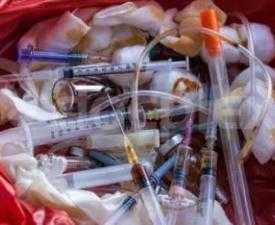
Description
Course Name: Certificate in Hospital Waste Management
Course Id: CHWM/Q1001.
Eligibility: 10th Grade (high school) or Equivalent.
Duration: Three Month.
Objective: The Certificate in Hospital Waste Management course is designed to provide participants with the essential knowledge and skills required for the safe, efficient, and compliant handling, segregation, treatment, and disposal of biomedical and hospital waste. The course aims to ensure that healthcare institutions minimize risks to healthcare workers, patients, the public, and the environment.
How to Enroll and Get Certified in Your Chosen Course:
Step 1: Choose the course you wish to get certified in.
Step 2: Click on the “Enroll Now” button.
Step 3: Proceed with the enrollment process.
Step 4: Enter your billing details and continue to course fee payment.
Step 5: You will be redirected to the payment gateway. Pay the course and exam fee using one of the following methods:
Debit/Credit Card, Wallet, Paytm, Net Banking, UPI, or Google Pay.
Step 6: After successful payment, you will receive your study material login ID and password via email within 48 hours of fee payment.
Step 7: Once you complete the course, take the online examination.
Step 8: Upon passing the examination, you will receive:
• A soft copy (scanned) of your certificate via email within 7 days of examination.
• A hard copy (original with official seal and signature) sent to your address within 45 day of declaration of result.
Step 9: After certification, you will be offered job opportunities aligned with your area of interest.
Online Examination Detail:
Duration- 60 minutes.
No. of Questions- 30. (Multiple Choice Questions).
Maximum Marks- 100, Passing Marks- 40%.
There is no negative marking in this module.
| Marking System: | ||||||
| S.No. | No. of Questions | Marks Each Question | Total Marks | |||
| 1 | 10 | 5 | 50 | |||
| 2 | 5 | 4 | 20 | |||
| 3 | 5 | 3 | 15 | |||
| 4 | 5 | 2 | 10 | |||
| 5 | 5 | 1 | 5 | |||
| 30 | 100 | |||||
| How Students will be Graded: | ||||||
| S.No. | Marks | Grade | ||||
| 1 | 91-100 | O (Outstanding) | ||||
| 2 | 81-90 | A+ (Excellent) | ||||
| 3 | 71-80 | A (Very Good) | ||||
| 4 | 61-70 | B (Good) | ||||
| 5 | 51-60 | C (Average) | ||||
| 6 | 40-50 | P (Pass) | ||||
| 7 | 0-40 | F (Fail) | ||||
Key Benefits of Certification- Earning a professional certification not only validates your skills but also enhances your employability. Here are the major benefits you gain:
Practical, Job-Ready Skills – Our certifications are designed to equip you with real-world, hands-on skills that match current industry demands — helping you become employment-ready from day one.
Lifetime Validity – Your certification is valid for a lifetime — no renewals or expirations. It serves as a permanent proof of your skills and training.
Lifetime Certificate Verification – Employers and institutions can verify your certification anytime through a secure and reliable verification system — adding credibility to your qualifications.
Industry-Aligned Certification –All certifications are developed in consultation with industry experts to ensure that what you learn is current, relevant, and aligned with market needs.
Preferred by Employers – Candidates from ISO-certified institutes are often prioritized by recruiters due to their exposure to standardized, high-quality training.
Free Job Assistance Based on Your Career Interests – Receive personalized job assistance and career guidance in your preferred domain, helping you land the right role faster.
Syllabus
Introduction to Hospital Waste Management: Definition and importance of hospital waste management, Types of hospital waste: general, infectious, hazardous and radioactive, Sources of hospital waste, Legal and regulatory framework for hospital waste management, Responsibilities of healthcare institutions in waste disposal, Health hazards of improper hospital waste disposal, Overview of international guidelines (WHO, EPA, etc.), Role of hospital waste management in infection control, Key principles of sustainable waste management, Challenges in hospital waste management.
Classification and Segregation of Hospital Waste: Need for proper segregation of hospital waste, Categories of biomedical waste as per guidelines, Color-coded waste segregation system, Types of waste containers and their uses, Segregation at the point of generation, Role of healthcare professionals in waste segregation, Common errors in waste segregation and their impact, Importance of labeling and signage in waste management, Best practices in waste segregation, Case studies on hospital waste segregation.
Collection, Storage, and Transportation of Hospital Waste: Methods of waste collection in healthcare facilities, Safe handling practices for hospital waste, Temporary and centralized storage of hospital waste, Recommended storage time for different waste types, Equipment and containers for waste transportation, Transportation guidelines for biomedical waste, Role of trained personnel in waste handling, Prevention of cross-contamination during waste transport, Occupational health and safety measures for waste handlers, Case studies on effective hospital waste transportation.
Treatment and Disposal Methods: Overview of waste treatment methods, Incineration: process, advantages, and disadvantages, Autoclaving and microwave treatment, Chemical disinfection of hospital waste, Deep burial method for biomedical waste, Waste shredding and its importance, Radioactive waste disposal techniques, Liquid waste treatment in hospitals, Best practices for disposal of pharmaceutical and cytotoxic waste, Compliance with environmental and safety regulations.
Hazardous and Infectious Waste Management: Definition and types of hazardous hospital waste, Risks associated with hazardous waste in hospitals, Proper disposal of sharps and needles, Handling of pathological and anatomical waste, Management of expired pharmaceuticals and chemotherapy waste, Safe disposal of blood and body fluids, Handling of microbiological and laboratory waste, Protective equipment for handling hazardous waste, Role of healthcare workers in preventing hazardous waste exposure, Case studies on hazardous waste management.
Waste Minimization and Recycling in Healthcare: Importance of waste minimization in hospitals, Strategies for reducing hospital waste, Reusable vs. disposable medical equipment, Recycling of plastics, paper and glass in healthcare, Safe reuse practices for medical instruments, Role of green hospitals in sustainable waste management, Composting of biodegradable hospital waste, Reducing pharmaceutical waste through better inventory management, Waste-to-energy technologies in hospital waste management, Case studies on hospital waste minimization.
Job Opportunities after Certificate in Hospital Waste Management
Graduates of this program gain expertise in hospital waste handling, segregation, treatment, disposal, infection control, regulatory compliance, and environmental safety, preparing them for roles in healthcare, environmental management, and waste management sectors.
Key Career Options: Hospital Waste Management Officer, Environmental Health & Safety Officer, Waste Disposal Supervisor, Environmental Consultant (Hospital Sector), Hospital Infection Control Specialist, Medical Waste Disposal Technician, Waste Management Trainer, Regulatory Compliance Specialist, Waste Management Coordinator (NGO/Environmental Organizations), Project Manager (Waste Management Projects).
Salary Range (India):
- Entry-level: ₹2.5–6 LPA
- Mid-level: ₹5–12 LPA
- Senior-level: ₹10–35 LPA (higher in managerial or consultancy roles)
Industries Hiring Graduates: Hospitals, Clinics & Nursing Homes, Healthcare Providers, Environmental Agencies (Government & Private), Specialized Waste Management Companies, NGOs & International Organizations, Environmental Consulting Firms.
Skills Developed: Hospital waste categorization, handling and segregation, hazardous waste treatment (incineration, autoclaving, chemical disinfection), infection control, safety protocols, regulatory compliance, auditing, and environmental risk assessment.
Graduates can progress to senior roles such as Hospital Waste Management Manager, Environmental Consultant, Project Manager, or head safety and compliance divisions. Additional certifications like CHESP (Certified Healthcare Environmental Services Professional), CSP (Certified Safety Professional), or a Diploma/Master’s in Environmental Health or Environmental Management can accelerate career growth and leadership opportunities.


