
Sale!

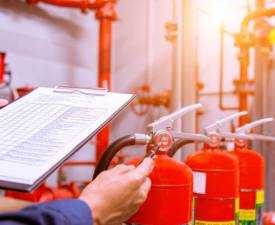
Certificate in Fire Technician

6,000 3,000

Enroll your course today to avail 50% fee concession offer, Certificate is valid for all type of Employment.

The Certificate in Fire Technician is a specialized training program designed to equip individuals with the necessary skills and knowledge to become proficient in fire safety and firefighting techniques.

Description

Course Name: Certificate in Fire Technician

Course Id: CFT/Q1001.

Eligibility: Completion of 10th Grade (high School) or equivalent.

Objective: The Certificate in Fire Technician program is an excellent opportunity for individuals interested in a career in fire safety and firefighting. This course provides the essential skills and knowledge needed to handle fire-related emergencies, maintain fire safety equipment, and ensure compliance with fire safety regulations.

Duration: Three Months.

🎓 How to Enroll and Get Certified in Your Chosen Course:

✔️ Step 1: Choose the course you wish to get certified in.

✔️ Step 2: Click on the “Enroll Now” button.

✔️ Step 3: Proceed with the enrollment process.

✔️ Step 4: Enter your billing details and continue to course fee payment.

✔️ Step 5: You will be redirected to the payment gateway. Pay the course and exam fee using one of the following methods:
Debit/Credit Card, Wallet, Paytm, Net Banking, UPI, or Google Pay.

✔️ Step 6: After successful payment, you will receive your study material login ID and password via email within 48 hours of fee payment.

✔️ Step 7: Once you complete the course, take the online examination.

✔️ Step 8: Upon passing the examination, you will receive:
• A soft copy (scanned) of your certificate via email within 7 days of examination.
• A hard copy (original with official seal and signature) sent to your address within 45 day of declaration of result.

✔️ Step 9: After certification, you will be offered job opportunities aligned with your area of interest.

Online Examination Detail:

Duration- 60 minutes.
No. of Questions- 30. (Multiple Choice Questions).
Maximum Marks- 100, Passing Marks- 40%.
There is no negative marking in this module.

Marking System:
S.No. No. of Questions Marks Each Question Total Marks
1 10 5 50
2 5 4 20
3 5 3 15
4 5 2 10
5 5 1 5
30 100
How Students will be Graded:
S.No. Marks Grade
1 91-100 O (Outstanding)
2 81-90 A+ (Excellent)
3 71-80 A (Very Good)
4 61-70 B (Good)
5 51-60 C (Average)
6 40-50 P (Pass)
7 0-40 F (Fail)

🌟 Key Benefits of Certification- Earning a professional certification not only validates your skills but also enhances your employability. Here are the major benefits you gain:

✅ Practical, Job-Ready Skills – Our certifications are designed to equip you with real-world, hands-on skills that match current industry demands — helping you become employment-ready from day one.

📜 Lifetime Validity – Your certification is valid for a lifetime — no renewals or expirations. It serves as a permanent proof of your skills and training.

🔍 Lifetime Certificate Verification – Employers and institutions can verify your certification anytime through a secure and reliable verification system — adding credibility to your qualifications.

🎯 Industry-Aligned Certification –All certifications are developed in consultation with industry experts to ensure that what you learn is current, relevant, and aligned with market needs.

💼 Preferred by Employers – Candidates from ISO-certified institutes are often prioritized by recruiters due to their exposure to standardized, high-quality training.

🤝 Free Job Assistance Based on Your Career Interests – Receive personalized job assistance and career guidance in your preferred domain, helping you land the right role faster.

Syllabus:-

Module 1: Fundamentals of Fire Science and Safety: Introduction to Fire Safety Concepts and Terminology, Understanding the Fire Tetrahedron/Triangle, Principles of Combustion and Heat Transfer (Conduction, Convection, Radiation), Classification of Fires (Classes A, B, C, D, K), Identifying Common Causes of Fires in Residential and Commercial Settings, Basic Principles of Fire Prevention, Human Behavior in Fire Emergencies, Legal and Regulatory Frameworks for Fire Safety, Risk Assessment and Hazard Identification, Importance of Safety Signage and Egress Routes.

Module 2: Fire Extinguishers and Suppression Systems: Types of Fire Extinguishers (Water, Foam, Dry Chemical, CO2, Clean Agent), Selection and Placement Criteria for Extinguishers, Operation and Discharge Techniques (PASS Method), Inspection, Maintenance, and Hydrostatic Testing of Extinguishers, Introduction to Automatic Sprinkler Systems (Wet, Dry, Deluge, Pre-Action), Components of a Sprinkler System (Heads, Pipes, Valves), Fire Suppression Gases and Clean Agent Systems (e.g., FM-200, Novec 1230), Kitchen Fire Suppression Systems (Class K Systems), Portable vs. Fixed Fire Suppression Systems, Record Keeping and Documentation for Suppression Systems.

Module 3: Fire Detection and Alarm Systems: Principles of Fire Detection Technology, Types of Fire Detectors (Smoke, Heat, Flame, CO), Conventional vs. Addressable Fire Alarm Systems, Fire Alarm Control Panel (FACP) Operation and Programming, Installation and Wiring Standards for Detectors and Alarms, Troubleshooting Common Alarm System Faults (Fault, Trouble, Alarm Signals), Manual Call Points (MCPs) and Notification Appliances (Horns, Strobes), Integration of Fire Alarm Systems with HVAC and Access Control, Routine Testing and Maintenance Procedures for Alarms, Understanding False Alarm Causes and Prevention.

Module 4: Fire Hydrant and Water-Based Systems: Introduction to Fire Hydrant Systems (Wet Barrel, Dry Barrel), Components of a Fire Hydrant System (Pumps, Jockey Pump, Piping, Hose Reels), Installation Standards and Water Flow Requirements, Testing and Maintenance of Fire Pumps and Drivers, Laying, Connecting, and Rolling Fire Hoses, Nozzles and Jet Patterns for Firefighting, Calculation of Water Demand and Pressure Requirements, Standpipe Systems (Class I, II, III), Basic Knowledge of Water Storage Tanks and Reservoirs, Safety Procedures During Water System Testing.

Module 5: Fire Technician Tools, Equipment and Inspection: Use of Multimeters and Specialized Testing Equipment, Understanding Pipe Fitting and Jointing Techniques, Safe Use of Ladders, Scaffolding, and Working at Heights, Maintenance and Calibration of Inspection Tools, Personal Protective Equipment (PPE) for Fire Technicians, Interpreting Blueprints and Fire System Drawings, Conducting Fire Safety Inspections and Checklists, Documentation of Inspection Findings and Deficiencies, Reading and Applying National Fire Codes and Standards (e.g., NFPA), Hazardous Materials (HazMat) Identification and Precautions.

Module 6: Professional Practice and Emergency Response: Roles and Responsibilities of a Fire Technician, Customer Service and Communication Skills, Developing Emergency Action Plans (EAPs), Basic Principles of Search and Rescue Operations, Understanding Building Evacuation Procedures and Flow Rates, Conducting Fire Drills and Training Occupants, Incident Command System (ICS) Overview, Coordinating with Fire Service and Emergency Responders, Record Keeping, Certification, and Professional Development, Safety and Health Regulations for Technicians.

Job Opportunities after Certificate in Fire Technician

Graduates can build careers in fire safety, equipment maintenance, and emergency response across industrial and commercial sectors.

Top Roles: Fire Technician, Fire Safety Officer, Fire Protection Engineer, Fire Equipment Inspector, Fire Safety Consultant, Emergency Response Coordinator, HSE Officer, Fire Safety Trainer, Fire Safety Auditor

Key Sectors: Manufacturing industries, construction & infrastructure, oil & gas, chemical & pharmaceutical companies, energy & power plants, fire safety companies, government fire departments, logistics & transport, and safety consulting firms

Salary Range (India):
Entry-level: ₹1.8–3 LPA
Mid-level: ₹3–5.5 LPA
Senior-level: ₹5.5–8.5 LPA+
High-risk/International roles: ₹8–15 LPA+

Scope: Growing demand due to strict safety regulations and industrial expansion. Strong opportunities in installation, maintenance, and safety compliance roles, with career growth into HSE management, consulting, or specialized technical expertise.

Reviews

There are no reviews yet.

Be the first to review “Certificate in Fire Technician”